Elixir Logistics
Global sourcing offers lower costs, broader supplier access, and specialized production. It also creates longer, less visible logistics chains. A delayed container in Asia can stop an assembly line in Europe within days. That exposure makes resilience a strategic requirement, not merely an operational preference.
The McKinsey Global Institute reports that disruptions lasting one month or longer occur about every 3.7 years. It also estimates that companies can lose nearly 45% of one year’s profits over a decade from supply-chain disruptions. UNCTAD’s Review of Maritime Transport confirms that more than 80% of global merchandise trade moves by sea. These figures reveal the scale of concentration, distance, and dependency. They also show why How To Build Resilient Logistics Systems deserves careful attention.
Martin Christopher, a leading supply-chain scholar, states, “Supply chains compete, not companies.” His observation remains practical. A resilient system connects sourcing, transport, inventory, data, and supplier relationships. It uses multiple transport options, realistic safety stock, and early-warning indicators. It also tests failure scenarios before a crisis occurs.
Resilience is not the same as maximum inventory. That assumption can waste cash and hide weak processes. A better approach balances speed, cost, visibility, and recovery capacity. Real warehouses still face incomplete data, staffing gaps, and uncertain demand. No framework predicts every disruption. That limitation matters.
This introduction examines how global sourcing teams can design logistics networks that absorb shocks, recover faster, and support responsible long-term growth.
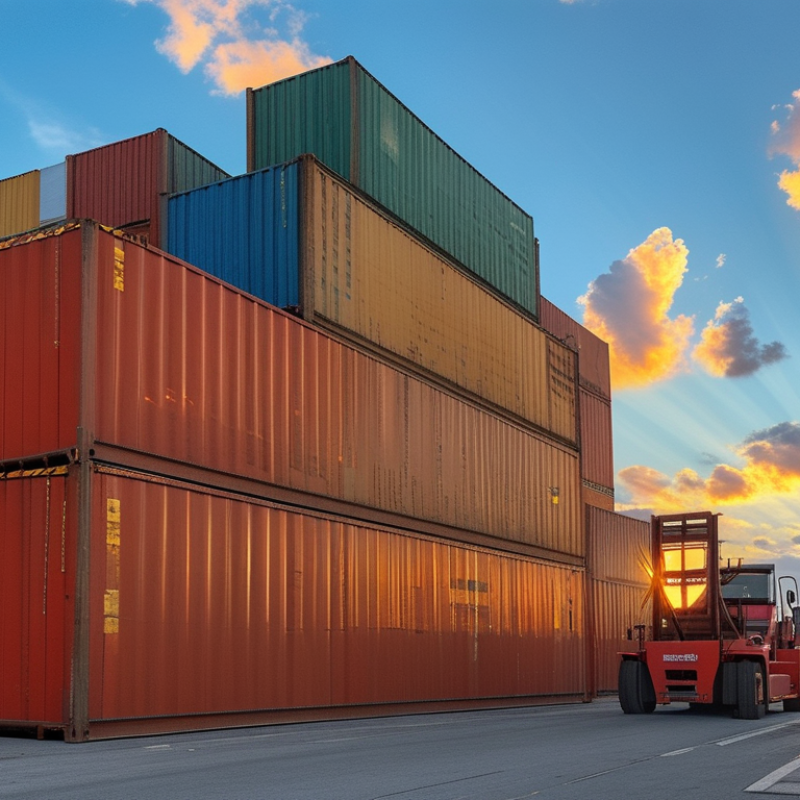
Resilient logistics systems are designed to keep global sourcing moving during disruption. Their scope extends beyond transportation. It includes supplier mapping, purchasing, ports, customs, warehouses, inventory, data, and recovery planning. The World Bank’s Logistics Performance Index 2023 assessed 139 economies and highlighted major gaps in customs efficiency, infrastructure, and shipment tracking. Resilience must address these gaps, not merely add more stock.
A practical system connects daily decisions with visible risk signals. A sourcing team may monitor supplier capacity, port congestion, weather alerts, and border delays. It can then shift volumes, reserve alternative routes, or adjust delivery windows.
UNCTAD’s Review of Maritime Transport 2023 notes that maritime shipping carries over 80% of global merchandise trade by volume. One blocked gateway can therefore affect factories, retailers, and consumers far away. Small details matter. A missing scan can become a missed production shift.
Resilience also requires measurable limits. Useful indicators include recovery time, order fill rate, supplier concentration, inventory coverage, and data accuracy. The system should test realistic scenarios, including fuel shortages, cyber incidents, and sudden demand changes. Yet redundancy is not free. Extra warehouses can increase cost, waste, and emissions. My own operational view is less optimistic: dashboards often look impressive, while local teams still lack authority to act. A resilient design should combine reliable data with trained people, clear escalation rules, and regular review. It will not remove uncertainty. It makes uncertainty easier to manage.
Global sourcing networks rarely fail at one dramatic point. They weaken through small delays: a missing component, a port closure, or a sudden freight-rate jump. UNCTAD’s Review of Maritime Transport 2023 notes that about 80% of world merchandise trade by volume moves by sea. That concentration creates exposure. A disruption in one corridor can quickly reach factories thousands of miles away. Yet many risk reviews still examine suppliers separately. A costly blind spot.
The World Bank’s Logistics Performance Index 2023 shows uneven customs, infrastructure, and delivery reliability across economies. These gaps matter when inventory buffers are thin. The World Economic Forum’s Global Risks Report 2024 ranked extreme weather among the leading near-term global risks. Flooded roads, heat-damaged equipment, and water restrictions can stop production without warning. Cyber incidents add another layer, especially when purchasing, warehouse, and transport systems share data. The risk is connected.
Resilient design starts with mapping tier-two and tier-three dependencies, not merely counting approved suppliers. Teams can test alternate ports, regional inventory, dual transport modes, and manual fallback procedures. Small drills reveal uncomfortable truths. A backup supplier may lack capacity. An emergency route may depend on the same vulnerable crossing. In operational practice, recovery time matters more than purchase price. Still, redundancy costs money, and excess stock can hide weak planning. The difficult question is deciding which failure deserves investment before the shipment is already late.
A data-based risk view of global sourcing networks, including exposure indicators, operational effects, and practical resilience measures.
| Risk Dimension | Evidence-Based Indicator | Observed Data Point | Potential Impact on Sourcing | Recommended Resilience Measure | Priority | Reference |
|---|---|---|---|---|---|---|
| Maritime chokepoint disruption | Dependence on major canals and strategic waterways | Approximately 12% of global trade normally passes through the Suez Canal. | Rerouting can extend voyage distances, fuel consumption, freight costs, and replenishment lead times. | Map critical lanes, qualify alternative ports, maintain multimodal routing options, and define rerouting triggers in advance. | High | UN Trade and Development |
| Canal capacity and water scarcity | Daily vessel-transit capacity affected by drought conditions | During the 2023–2024 drought period, planned daily transits through the Panama Canal were reduced from about 36 to 24. | Ship queues, booking uncertainty, higher premiums, and delays for routes linking the Atlantic and Pacific markets. | Use route alternatives, reserve capacity early, diversify port pairs, and include water-risk scenarios in transport planning. | High | Panama Canal Authority |
| Climate-related logistics interruption | Exposure of ports, roads, railways, and warehouses to floods, storms, heat, and drought | Climate hazards can simultaneously affect production sites, transport corridors, ports, and downstream distribution nodes. | Physical damage, temporary shutdowns, missed delivery windows, inventory shortages, and increased insurance costs. | Perform site-level climate mapping, establish alternate warehouses and corridors, raise protection standards, and test business-continuity plans. | High | Intergovernmental Panel on Climate Change |
| Critical-mineral processing concentration | Geographic concentration of refining and processing capacity | The top three refining countries account for more than 90% of global refining output for several energy-transition minerals, including lithium, cobalt, graphite, and rare earth elements. | Export controls, energy shortages, environmental restrictions, or political instability in one processing hub can affect many downstream industries. | Track origin beyond the immediate supplier, develop recycled-material streams, qualify substitute materials, and use multi-region processing. | High | International Energy Agency |
| Single-source and tier visibility | Number of qualified suppliers and visibility beyond first-tier suppliers | First-tier supplier records often do not reveal dependency on common sub-suppliers, shared tooling, or the same raw-material source. | A disruption affecting one hidden node can interrupt several apparently independent suppliers at the same time. | Maintain a multi-tier supplier map, calculate supplier concentration, conduct dependency reviews, and qualify technically compatible alternatives. | High | Organisation for Economic Co-operation and Development |
| Trade-policy and border volatility | Changes in tariffs, export controls, sanctions, customs rules, and documentation requirements | Trade restrictions can be introduced or modified rapidly, creating compliance obligations that differ by product, origin, and destination. | Longer customs clearance, stranded inventory, unexpected landed-cost increases, and inability to ship controlled products. | Use product-level trade classification, maintain origin documentation, monitor regulatory changes, and prepare compliant alternative routes and suppliers. | High | World Trade Organization |
| Freight-rate and fuel-price volatility | Variation in ocean, air, road, rail, fuel, and accessorial charges | Disruptions, capacity shortages, congestion, and rerouting can cause freight rates to diverge sharply from contracted or budgeted levels. | Unstable landed costs, margin pressure, supplier renegotiations, and reduced reliability of sourcing budgets. | Use indexed contracts with clear adjustment rules, compare transport modes, consolidate shipments, and model total landed cost under multiple scenarios. | Medium | UN Trade and Development, Review of Maritime Transport |
| Port and inland-network congestion | Reliability of port handling, rail connections, trucking capacity, and inland terminals | International logistics performance depends on coordinated customs, infrastructure, shipment tracking, and service quality across the complete corridor. | Longer and less predictable lead times, container dwell, demurrage, production stoppages, and missed customer commitments. | Measure end-to-end lead-time variability, use port and corridor scorecards, pre-book critical capacity, and maintain alternate inland routes. | High | World Bank Logistics Performance Index |
| Cybersecurity and digital-system dependency | Reliance on enterprise systems, supplier portals, transport-management systems, and port or customs platforms | Digitization improves visibility but also creates operational dependence on data availability, access controls, system integrity, and third-party connectivity. | Shipment release delays, incorrect orders, loss of tracking visibility, fraud exposure, and disruption of warehouse or transport operations. | Segment networks, apply multifactor authentication, test offline procedures, assess third-party cyber controls, and maintain recovery-time objectives. | High | National Institute of Standards and Technology |
| Demand uncertainty and forecast error | Difference between forecast demand, actual demand, and replenishment lead time | Long, variable global lead times amplify forecast errors because purchase decisions are made well before the final market signal is known. | Excess stock in slow markets, shortages in fast markets, obsolescence, expediting costs, and uneven capacity utilization. | Use shorter planning cycles, scenario-based forecasting, postponement, regional buffers, supplier collaboration, and segmented service-level targets. | Medium | Organisation for Economic Co-operation and Development |
| Supplier financial and operational fragility | Liquidity, capacity utilization, labor availability, quality performance, and recovery capability | Supplier failure risk can increase when a supplier operates with limited cash reserves, high customer concentration, or insufficient backup capacity. | Unexpected production stoppage, quality deterioration, delayed recovery, and costly emergency qualification of replacement sources. | Use financial and operational early-warning indicators, conduct regular audits, maintain recovery plans, and qualify backup capacity before a crisis. | High | International Organization for Standardization |
Resilient logistics begins with visibility, not speed. Supply teams need one current view of orders, inventory, transport status, and supplier capacity. Useful signals include port congestion, weather alerts, lead-time changes, and quality holds. Data should be checked against physical counts and carrier updates. Trade documents and delivery records also need controlled access and regular review. Dashboards alone can create false confidence.
A resilient network also needs balanced sourcing. Qualified suppliers in different regions can reduce dependence on one route or factory. However, diversification adds audits, coordination, and uneven quality. Teams should define approved alternatives before disruption occurs.
Strategic inventory buffers protect critical materials, but excess stock ties up cash and may become obsolete. Not every buffer helps. The right level depends on demand volatility, replenishment time, and material importance.
Flexible transport is another core component. Contracts should support more than one mode, route, and handoff point. Scenario exercises can test responses to delayed vessels, border closures, cyber incidents, or sudden demand changes. Clear ownership matters: someone must decide, communicate, and document each action. Measures such as recovery time, forecast accuracy, supplier response time, and order completeness make resilience visible. The numbers can mislead. A team may improve recovery time by expediting costly shipments. That is not real resilience. Continuous review is essential after a disruption exposes an overlooked dependency.
Global sourcing rarely fails at one dramatic point. A delayed vessel, a factory power cut, or one missing document can unsettle an entire production plan. Resilient systems connect supplier data, transport updates, inventory levels, and compliance checks in one working view. That view is practical, not perfect. It helps teams see risk earlier and act with evidence.
In practical sourcing work, useful resilience begins with clear supplier mapping. Teams should know which site makes each component, which route carries it, and how quickly an approved alternative can respond. A small buffer near a major assembly site may protect output during a ten-day port disruption. Scenario exercises also matter. Ask what happens if demand rises 30 percent, a border inspection lasts longer, or a key forecast is wrong. Forecasts are often wrong. That is uncomfortable, but measurable assumptions are easier to improve.
Resilient systems support global sourcing by turning scattered signals into coordinated decisions. Automated alerts can flag late milestones, unusual lead-time changes, or missing certificates before a shipment becomes urgent. Human review remains essential because data can be incomplete or misleading. Strong governance defines who approves substitutions, updates risk records, and communicates with suppliers. It also records failures without hiding them. Overbuilding resilience can tie up cash, while underbuilding it can stop production. The right design is tested, adjusted, and documented as conditions change.
Global sourcing needs resilience, not just lower purchase prices. A resilient logistics system can absorb port closures, supplier failures, and sudden demand changes. A 2020 McKinsey survey found that 73% of supply chain leaders had experienced supplier-related problems. The same study reported that 93% planned to increase resilience investments. These figures show a clear gap between efficiency and preparedness.
Assessment should begin with a practical risk map. List critical suppliers, transport routes, production sites, and single-source materials. Then measure probability, financial impact, recovery time, and available substitutes. A useful test asks one question: how long can operations continue if a key shipment stops today? Compare that answer with actual lead times and safety-stock levels. Scenario exercises should include a blocked container terminal, a failed component supplier, and a three-week customs delay. The World Economic Forum’s Global Risks Report 2024 identified extreme weather as a leading short-term global risk. Weather exposure belongs in logistics planning, not only insurance files.
Tips: Track supplier concentration monthly. Set recovery-time targets for critical goods. Keep alternative routes documented and tested. Avoid treating dashboards as proof of resilience. A clean spreadsheet can hide weak data. Review assumptions with warehouse staff, carriers, and procurement teams. Their experience may reveal delays that senior reports miss. Pilot one improvement, measure results, and revise the plan when reality disagrees.
: It keeps sourcing moving during disruptions. It connects suppliers, transport, ports, customs, warehouses, inventory, data, and recovery plans. It cannot remove uncertainty.
One delayed vessel or missing document can interrupt distant factories. A blocked gateway may affect production, retailers, and customers. Small failures matter.
Teams should monitor supplier capacity, port congestion, weather alerts, border delays, and unusual lead-time changes. They should also check missing scans and certificates. Data may be incomplete.
Supplier mapping identifies each production site, component, transport route, and approved alternative. It shows how quickly another supplier could respond. The map needs regular updates.
Inventory levels should match recovery time, demand volatility, and supplier concentration. A small buffer near an assembly site may protect output during a ten-day port disruption. More stock is not always better.
Testing should include fuel shortages, cyber incidents, longer border inspections, and sudden demand increases. Teams might model demand rising by 30 percent. Forecasts fail.
No. Automated alerts can identify late milestones and missing certificates. Trained people must interpret signals and approve actions. A dashboard may look excellent while local teams still wait for authority.
Useful indicators include recovery time, order fill rate, inventory coverage, supplier concentration, and data accuracy. Teams should compare results after each disruption. Some measurements remain imperfect.
Extra warehouses and inventory can increase costs, waste, and emissions. Too little protection can stop production. The practical answer is tested redundancy, clear escalation rules, and regular review.
Resilient logistics systems are designed to help global sourcing networks withstand disruption while maintaining the reliable movement of materials, products, and information. They address risks such as transportation delays, supplier failures, demand fluctuations, communication gaps, natural events, and regulatory changes. Rather than relying on a single route or supplier, a resilient system combines visibility, flexibility, contingency planning, inventory balance, supplier diversification, and effective coordination across the supply chain.
How To Build Resilient Logistics Systems begins with identifying critical vulnerabilities and measuring their potential operational and financial impact. Organizations can then improve resilience by mapping supply networks, monitoring early warning signals, developing alternative sourcing and transportation options, strengthening data sharing, and regularly testing recovery plans. Performance should be assessed through indicators such as recovery speed, service continuity, lead-time stability, and response effectiveness. Continuous evaluation enables global sourcing operations to adapt to changing conditions, reduce exposure to disruption, and support dependable long-term performance.
